ข่าวสารตลาด cryptocurrency ทั่วโลก วันอาทิตย์ที่ 11 มกราคม 2566: Bitcoin รวมกลุ่มอยู่ที่ประมาณ 90,000 ดอลลาร์หลังจากสัปดาห์ที่มีความผันผวน, Ethereum และ altcoins ที่ใหญ่ที่สุดเพิ่มขึ้นเล็กน้อยท่ามกลางความไม่แน่นอนทางเศรษฐกิจมหภาค, นักลงทุนสถาบันยังคงให้ความสนใจ, 10 สกุลเงินดิจิทัลที่ได้รับความนิยมสูงสุด
Morning of January 11, 2026, the cryptocurrency market has generally stabilized after noticeable fluctuations in previous days. The price of Bitcoin hovers around $91,000, with a total cryptocurrency market capitalization of approximately $3.1 trillion after a short-term dip in the middle of the week. Following Bitcoin, major altcoins led by Ethereum feel more confident: many of the top 10 digital assets show moderate growth. Investors, including institutional ones, still participate in the cryptocurrency market, although they act cautiously amid mixed macroeconomic signals and adjusted prices. Long-term factors such as tightening regulations and the proliferation of cryptocurrency instruments in traditional financial markets continue to support interest in the sector.
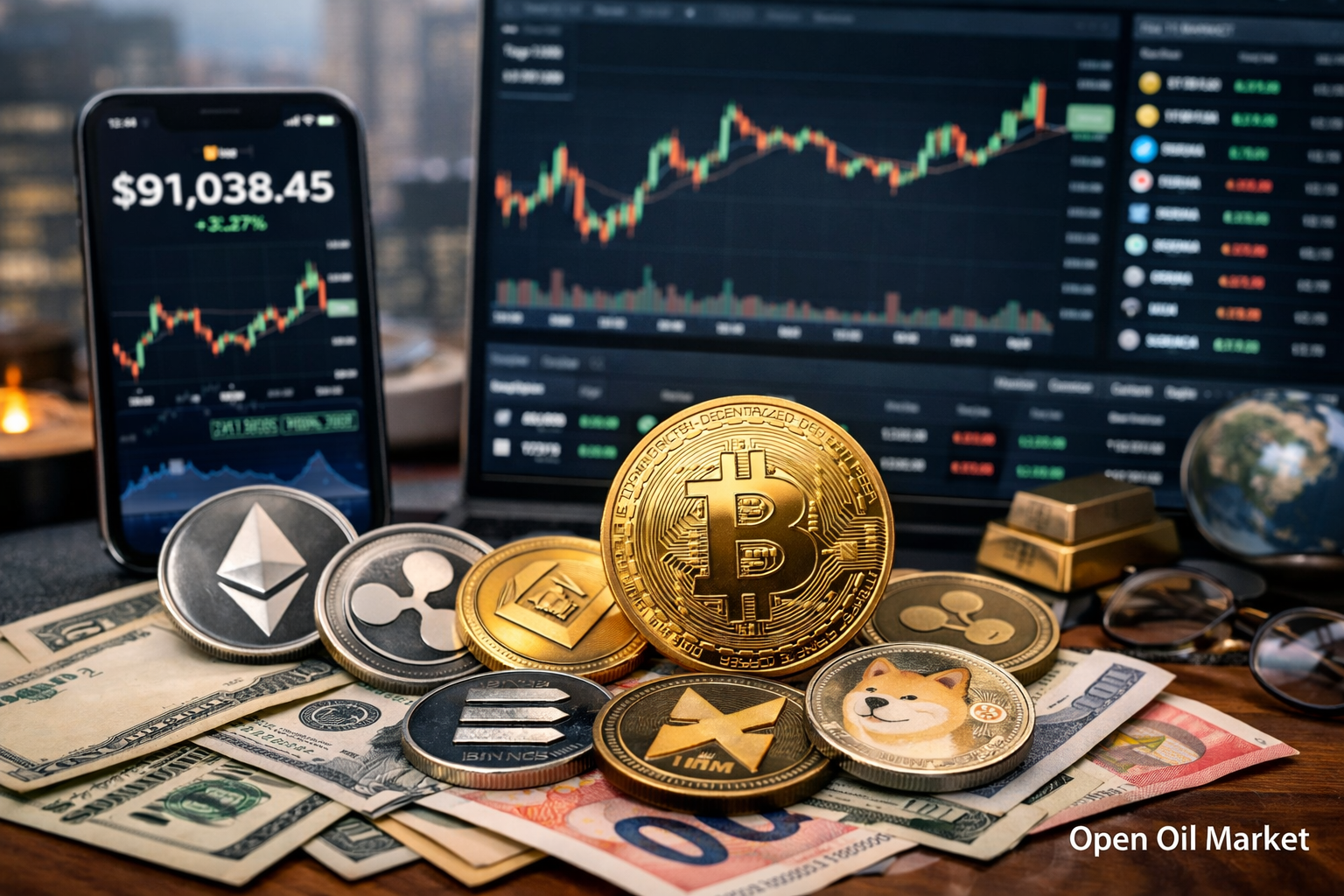
Bitcoin รวมกลุ่มอยู่ที่ประมาณ 90,000 ดอลลาร์
After a volatile start to the year, Bitcoin (BTC) is consolidating around the psychologically significant level of $90-91 thousand. In the first days of January, the first cryptocurrency attempted to rise: on January 5, the price climbed to around $94.8 thousand (a local maximum in recent months), but a correction followed. On the morning of January 8, the price of BTC briefly fell below $90,000, negating the increase at the beginning of the week, but currently Bitcoin has bounced back to around $91,000. The current levels are about 25% lower than the historical record (approximately $124,000 reached in August 2025), but since the beginning of 2026, BTC has shown a growth of around 3%. The market capitalization of Bitcoin is estimated at approximately $1.8 trillion, which accounts for about 58% of total cryptocurrency market capitalization.
Analysts note that the dynamics of Bitcoin are influenced by a contradictory news background. On the one hand, expectations for monetary policy easing remain: weak economic data in the USA (for example, the December ADP report showing an increase of only ~41,000 new jobs instead of the expected 50,000) have intensified forecasts that the Federal Reserve may start lowering interest rates in the second half of 2026. Soft monetary policy usually favors risk assets such as cryptocurrencies, supporting bullish sentiment. On the other hand, geo-economic uncertainty hinders growth: investors are cautiously awaiting resolutions on trade disputes and other political factors. In particular, market attention is drawn to the process in the US Supreme Court regarding the legality of tariffs imposed by Donald Trump, the outcome of which may affect risk appetite. In these conditions, Bitcoin demonstrates relative stability – even on the 17th anniversary of its creation (the BTC genesis block was mined on January 3, 2009), the first cryptocurrency retains its status as “digital gold” and a key asset in the industry.
Ethereum รักษาตำแหน่งที่สอง
The price of Ethereum (ETH) follows the dynamics of Bitcoin and as of January 11 is trading around $3,200. In the first days of the new year, Ether rose to around $3,300, showing highs not seen since autumn, and on a weekly interval in early January, ETH added about 6%. Despite retracting from its historical peak ($4,900 in November 2021), Ethereum confidently maintains its status as the second largest cryptocurrency by market capitalization. The current capitalization of ETH is approximately $380 billion, which corresponds to about 12% of the total cryptocurrency market value.
Interest in the smart contract platform remains high. Institutional investors in 2025 received a new way to invest in Ether – the first spot ETFs on Ethereum were launched in the USA, leading to a record influx of capital into Ethereum-related investment products. This reflects large players' confidence in Ethereum's long-term prospects as a fundamental infrastructure for decentralized applications (DeFi, NFTs, etc.). The technical development of the ecosystem continues: network upgrades and scaling solutions (second layers) strengthen Ethereum's position in the market. Experts note that due to the combination of technological leadership and support from institutions, Ethereum retains the potential for further price growth in the medium term.
Altcoins: การเคลื่อนไหวในตลาดที่หลากหลาย
The broad altcoin market, after a turbulent rise in 2025, shows mixed movements at the beginning of 2026. Prices of most major cryptocurrencies have changed insignificantly (by a few percent) in recent days, reflecting a phase of consolidation. The total market capitalization of altcoins (excluding Bitcoin) remains around ~ $1.3 trillion, significantly lower than the peak of $1.7 trillion recorded last summer, but indicates sustained investor interest in alternative digital assets. Some major altcoins continue to trade near their multi-year highs. For instance, Ripple (XRP) – the token for cross-border payments – has managed to hold high levels thanks to legal clarity of status (Ripple's victory over the SEC in 2025) and the emergence of exchange funds based on it. XRP is currently traded above $2 (for comparison, the peak of 2025 was about $3), and its market capitalization (~$100 billion) has once again secured it a place among the top three. Another example is Binance Coin (BNB): despite regulatory pressure surrounding the Binance exchange, this platform's native token is valued at about $500 (capitalization of about $80 billion) and is in the top 5. Although the current price of BNB is below its historical record (~$750), the coin shows resilience due to its wide range of uses in the exchange ecosystem and on the BNB Chain blockchain.
High results are also shown by platform tokens. Solana (SOL) rose above $150 per coin in early January, the first time since 2022. SOL's support was driven by news of the launch of the first spot ETF based on this network in the USA at the end of 2025 – the access of new investments added momentum to the growth, and Solana's market capitalization is now approaching ~$60-70 billion. Another top-ten altcoin, Cardano (ADA), is drawing analysts' attention: at the end of last year, the investment company Grayscale filed for an ETF related to ADA, which heated interest in this platform. As a result, ADA showed double-digit percentage price growth at certain moments (although the psychologically significant level of $1 has not yet been surpassed), confirming its status as one of the most promising projects. Notably, the meme cryptocurrency segment: in the first week of January, there was a surge in demand for high-risk “meme coins.” For example, Dogecoin (DOGE) rose by more than 20% over seven days, while Shiba Inu (SHIB) increased by almost 19%. The total market capitalization of meme tokens exceeded $45 billion, indicating active retail trader participation and an increase in risk appetite in specific market niches.
นักลงทุนสถาบันและ crypto-ETF
One of the key trends in recent months has been the high engagement of institutional investors in cryptocurrencies. In 2025, the first exchange-traded funds (ETFs) based on Bitcoin and Ethereum were approved in the USA, which opened access to digital assets for a wide range of large players through traditional stock exchanges. By the end of the year, regulators also permitted ETFs on certain altcoins - including XRP and Solana - into the market. The emergence of these instruments has been a significant milestone, demonstrating the expansion of interest from the financial industry in various crypto assets.
On the wave of launching new funds, the first weeks of their operation brought record capital inflows. However, by the beginning of 2026, the dynamics somewhat changed: according to recent data, spot crypto-ETFs faced short-term outflows amid price corrections. For instance, during trading on January 7-8, the total outflow from US Bitcoin funds amounted to about $0.5 billion, while funds based on Ethereum lost approximately $0.16 billion - marking the first series of consecutive sessions with net capital outflow since their launch. Experts view this trend as profit-taking after the rally at the end of 2025, rather than a decline in confidence: institutional investors still hold record volumes of crypto assets in historical perspective. Major management companies (BlackRock, Fidelity, etc.), hedge funds, and even pension programs have included Bitcoin and Ethereum in their portfolios, viewing them as a promising asset class for diversification. Among the factors supporting large-money interest in crypto are hedge inflation risks, the growing adoption of blockchain technology, and demand from clients. Currently, regulators are reviewing applications for the launch of ETFs for other cryptocurrencies (for example, Cardano), indicating further expansion of institutional participation in the market in the future.
ความรู้สึกในตลาดและความผันผวน
The autumn correction of 2025 significantly cooled the ardor of market participants, and investor sentiment remains restrained. The fear and greed index for cryptocurrencies has been in the "fear" zone since mid-December. As of January 8, it stood at 28 out of 100 points, reflecting traders' predominant caution and inclination toward careful trading. Analysts note that a prolonged period of low index values may indicate market overselling - similar levels have often preceded local upside reversals, as the most nervous players had already exited their positions. On the other hand, persistent fear indicates that confidence has not yet returned after the recent price collapse. This divergence is also manifested in the market structure: despite the overall index of "fear," pockets of speculative activity are observed (for instance, the rise of meme tokens), suggesting conflicting sentiments among different groups of investors. Experts recommend that market participants maintain composure and mitigate risks: until new fundamental drivers arise, sharp surges of optimism may quickly be replaced by sell-offs.
Short-term volatility remains heightened. The sharp price movements at the beginning of January led to mass liquidations of margin positions on cryptocurrency exchanges. According to Coinglass, within 24 hours up to the morning of January 8, positions worth more than $460 million were liquidated; about $415 million of that amount were long positions betting on market growth. As a result of the rapid price pullback, over 127,000 traders were forced to close their trades. Such “squeeze” of overly optimistic longs (long squeeze) worsened the drop in Bitcoin's quotes; however, similar episodes underscore the risks for players using high leverage. In recent years, the crypto market has repeatedly experienced similar spikes in volatility - for example, on October 10, 2025, amid an unexpected macroeconomic shock, a record liquidation of positions worth about $19 billion occurred in a single day. This case demonstrated that market participants should be prepared for sudden price spikes and drops, especially when trading on margins.
การคาดการณ์และความคาดหวัง
Market participants' views on the prospects for 2026 are divided. Some analysts maintain that after the vigorous growth of the previous year, the market may continue to cool down. They point to historical cyclicality: in the past, after a year of new highs (as seen in 2025), a period of decline often followed. Supporting this scenario are risks associated with external factors - for example, some experts warn that the possible bursting of the "bubble" surrounding the hype of artificial intelligence or other macroeconomic shocks could trigger a new decline in cryptocurrency quotes in the first half of 2026. Furthermore, a significant portion of long-term holders of BTC and ETH is still in profit after the rally, and their continued profit-taking could create pressure on the market. Analysts from CryptoQuant note that the exit of short-term speculators and "weak hands" from the market during the autumn sell-offs has largely cleared the way for more sustainable dynamics, but they do not rule out the likelihood of another corrective phase.
On the other hand, another group of experts is more optimistic. Thanks to unprecedented institutional participation and the integration of cryptocurrencies into the global economy, traditional four-year cycles may ease - it is expected that even if the bearish trend continues, it will be less lengthy and deep than previous "crypto winters." According to their forecasts, after the current consolidation phase, the market may resume growth as early as the second half of 2026, especially if the external macroeconomic conditions become more favorable (slowing inflation, reductions in rates, etc.). Some scenarios predict a wave-like development: for example, significant pullbacks may occur in the summer (in June-July) and a new rise towards the end of the year. Some months, according to strategists' assessments, could prove particularly successful for cryptocurrencies - in particular, April and the period from October to December 2026 are seen as potentially strong periods when the market is capable of recovering losses.
Overall, the consensus is that the fundamental drivers of industry growth have not disappeared. Cryptocurrencies continue to expand their application areas, and blockchain technologies are being implemented in finance, supply chains, and other industries, reducing costs and increasing efficiency. This is positive for the market in the long term. Therefore, even in the event of further corrections, many investors perceive it as an opportunity to accumulate assets at lower prices. With continued institutional interest and no new shocks, most analysts expect the total cryptocurrency market capitalization to gradually resume growth in the latter half of the year, potentially reaching new highs in 2025 in a 12-18 month outlook. When considering long-term targets, major financial companies still provide bullish forecasts. Several Wall Street banks maintain target levels for Bitcoin significantly higher than current ones - up to $150-200 thousand in upcoming years - based on limited BTC supply and rising demand. Whether these predictions come true will be shown by time and the further development of the global economy.
10 สกุลเงินดิจิทัลที่ได้รับความนิยมสูงสุด
ณ วันที่ 11 มกราคม 2566 สกุลเงินดิจิทัลยอดนิยม 10 อันดับแรกตามมูลค่าตลาด ได้แก่:
- Bitcoin (BTC) — สกุลเงินดิจิทัลแรกและใหญ่ที่สุด BTC ซื้อขายอยู่ที่ประมาณ 91,000 ดอลลาร์หลังจากมีความผันผวนล่าสุด มูลค่าตลาดอยู่ที่ประมาณ 1.8 ล้านล้านดอลลาร์ (≈58% ของตลาดทั้งหมด)
- Ethereum (ETH) — altcoin ที่นำและแพลตฟอร์มสำหรับ smart contracts ราคาของ ETH อยู่ที่ประมาณ 3,200 ดอลลาร์ซึ่งต่ำกว่ามูลค่าสูงสุดในประวัติศาสตร์มาก มูลค่าตลาดประมาณ 380,000 ล้านดอลลาร์ (≈12% ของตลาด)
- Tether (USDT) — stablecoin ที่ใหญ่ที่สุดที่ผูกกับค่าเงินดอลลาร์สหรัฐในอัตรา 1:1 USDT ถูกใช้มากมายในการซื้อขายและการชำระเงิน มูลค่าตลาดประมาณ 170,000 ล้านดอลลาร์; coin รักษาราคา $1.00 อย่างสม่ำเสมอโดยได้รับการสนับสนุนจากการสำรอง
- Ripple (XRP) — โทเคนสำหรับเครือข่ายการชำระเงิน Ripple สำหรับการชำระเงินข้ามพรมแดน XRP ตอนนี้ซื้อขายอยู่ที่ประมาณ $2.00 มูลค่าตลาด ~ 110,000 ล้านดอลลาร์ ความชัดเจนทางกฎหมายของสถานะ XRP ในสหรัฐอเมริกา (หลังจากการตัดสินของศาลในปี 2025) และการเปิดตัว ETF บนโทเคนนี้ได้เสริมความเชื่อมั่นของนักลงทุน ทำให้ XRP กลับมาอยู่ในกลุ่มผู้นำตลาดได้
- Binance Coin (BNB) — เหรียญของการแลกเปลี่ยน cryptocurrency ที่ใหญ่ที่สุด Binance และโทเคนหลักของเครือข่าย BNB Chain มูลค่าของ BNB ประมาณ 500 ดอลลาร์ (มูลค่าตลาดประมาณ 80,000 ล้านดอลลาร์) แม้จะมีความยุ่งยากด้านกฎระเบียบรอบ ๆ Binance แต่โทเคนยังคงอยู่ในกลุ่ม 5 อันดับแรกเนื่องจากการใช้งานที่หลากหลายบนการแลกเปลี่ยนและในพื้นที่ DeFi
- Solana (SOL) — แพลตฟอร์ม blockchain ที่มีประสิทธิภาพสูงสำหรับแอปพลิเคชันแบบกระจาย decentralization (dApps). SOL ซื้อขายอยู่ที่ประมาณ 150 ดอลลาร์ต่อเหรียญ (มูลค่า ~ 60,000 ล้านดอลลาร์) หายไปจากส่วนสำคัญของการตกต่ำในฤดูใบไม้ร่วงปี 2025 ความสนใจใน Solana ถูกกระตุ้นโดยการเปิดตัว ETF แรกบนสินทรัพย์นี้และการเติบโตของโครงการในฐานของมัน
- USD Coin (USDC) — stablecoin อันดับสองที่มีการสำรองในเงินดอลลาร์สหรัฐ (ออกโดยบริษัท Circle) ราคา USDC ถูกเก็บรักษาไว้ที่ระดับ 1 ดอลลาร์ มูลค่าประมาณ 60,000 ล้านดอลลาร์ USDC ถูกใช้โดยนักลงทุนสถาบันและในโปรโตคอล DeFi อย่างมากเนื่องจากความโปร่งใสและการตรวจสอบการสำรองอย่างสม่ำเสมอ
- Cardano (ADA) — แพลตฟอร์ม blockchain ที่เน้นวิธีการทางวิทยาศาสตร์ในการพัฒนา ADA ขณะนี้มีราคาอยู่ที่ประมาณ 0.70 ดอลลาร์ (มูลค่า ~ 23,000 ล้านดอลลาร์) หลังจากการแก้ไขจากระดับสูงสุดในท้องถิ่น Cardano ได้รับความสนใจจากแผนการเปิดตัว ETF สำหรับโทเคนนี้และชุมชนที่กระตือรือร้นซึ่งเชื่อในการเติบโตระยะยาวของโครงการ
- TRON (TRX) — แพลตฟอร์มสำหรับ smart contracts และแอปพลิเคชันกระจายอำนาจ โดยเฉพาะที่นิยมในเอเชีย TRX ซื้อขายอยู่ที่ประมาณ 0.25 ดอลลาร์; มูลค่าตลาดประมาณ 22,000 ล้านดอลลาร์ TRON ยังคงมีอยู่ในกลุ่ม 10 อันดับแรกบางส่วนเนื่องจากการใช้เครือข่ายอย่างกว้างขวางในการออก stablecoins (สัดส่วนที่สำคัญของ USDT ถูกซื้อขายบน blockchain ของ Tron)
- Dogecoin (DOGE) — สกุลเงินดิจิทัล meme ที่มีชื่อเสียงที่สุดที่สร้างขึ้นในตอนแรกเพื่อเป็นเรื่องตลก DOGE คงอยู่ที่ประมาณ 0.14 ดอลลาร์ (มูลค่าตลาด ~ 21,000 ล้านดอลลาร์) โดยได้รับการสนับสนุนจากความจงรักภักดีของชุมชนและความสนใจของคนดังในบางครั้ง ความผันผวนของ Dogecoin ยังคงสูง แต่ยังคงอยู่ในกลุ่ม 10 อันดับแรกของเหรียญที่แสดงให้เห็นถึงความสนใจของนักลงทุนที่น่าทึ่ง